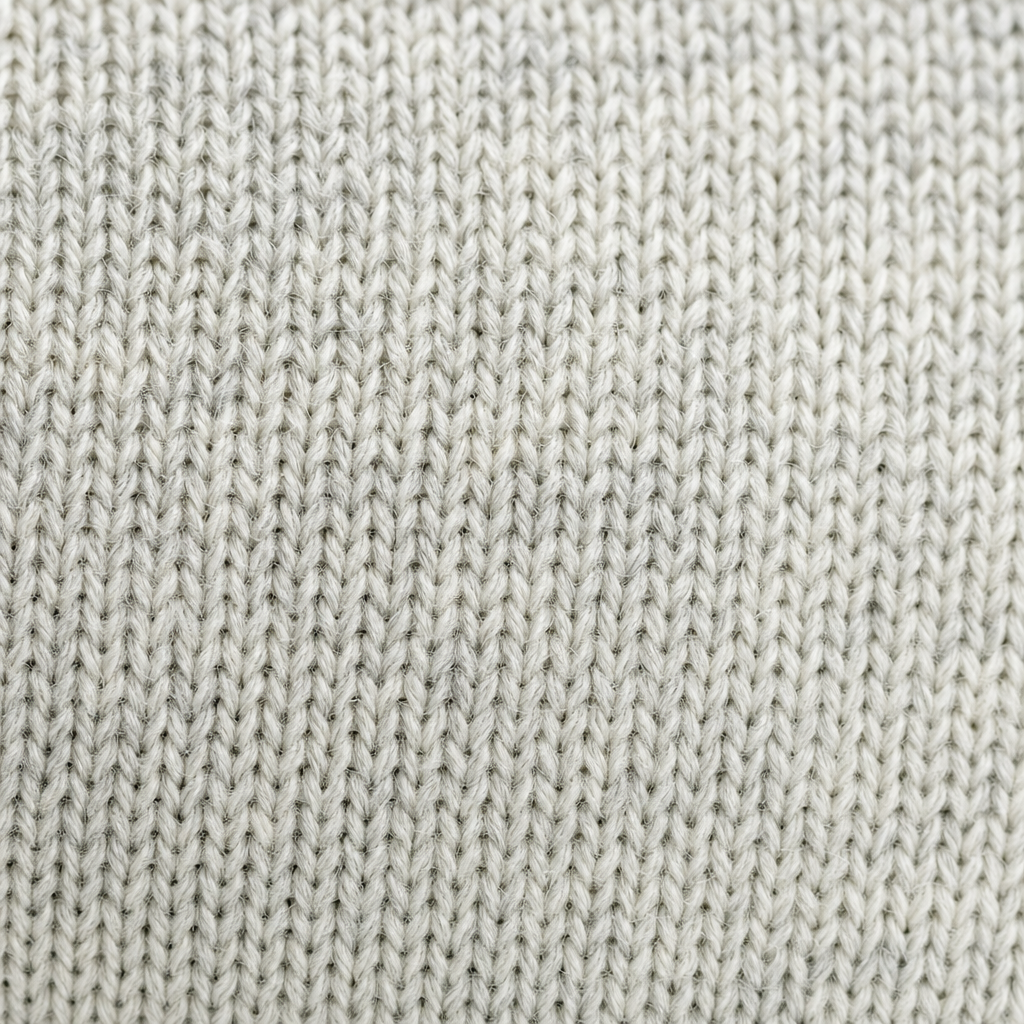
A well-fitting knit polo has the shoulder seam sitting exactly at the shoulder point, the chest relaxed with room to move (not pulling), and the hem falling at mid-hip without bunching at the waist. A 12-gauge knit has give in all directions, so fit reads differently than woven fabric — the shirt should skim the body, not cling. If the fabric pulls across the chest when your arms are at rest, size up. If the hem balloons at the sides, size down.
The fitting room in late afternoon. You pull the polo over your head — the knit fabric stretches and returns immediately to shape, a quality you can feel in the recovery speed. The shoulder seam lands somewhere. You turn to the mirror. The question is simple: does the line of the shirt follow the line of the body, or is it fighting it?
Where should the shoulder seam sit on a knit polo?
At the acromion — the bony point of the shoulder, at the top of the arm where the shoulder becomes the upper arm. This is the universal marker for a correct shoulder fit regardless of garment type. If the seam hangs off the shoulder toward the upper arm, the shirt is too large and the chest will bag. If the seam sits on the neck side of the shoulder point, the shirt is too small and will restrict arm movement. On a 12-gauge knit like Squalo Roma's polo range, the seam is not a load-bearing structure — it's a positioning guide. Check it first when trying a new size.
How should the chest fit on a knit polo?
Relaxed, with 2–4 inches of ease between the fabric and the chest when standing naturally. Knit fabric is not structured — it drapes where it falls. A knit polo with no ease across the chest reads as athletic wear, not as a considered garment. With the right ease, the fabric skims the chest and falls forward from the placket in a soft drape. To test: with both arms at your sides, the shirt should sit smooth and flat across the chest. Raise both arms to shoulder height — the shirt should lift with you, not stretch to its limit. If it pulls tight at that movement, size up.
How long should a knit polo be?
The hem should sit at the mid-hip — roughly at the top of the trouser pocket, or level with the knuckles when the arms hang naturally. A knit polo worn untucked at this length creates a clean horizontal line across the body that works with both trousers and shorts. If the hem falls below the hip curve, the shirt reads as too long and the silhouette collapses. If it rides above the hip bone, the proportion is off for the occasion. Squalo Roma polos are cut at the longer end of mid-hip to work for the tucked look as well.

Should a knit polo be tight or loose?
Neither. The target is a relaxed fit — a fit with intention. A knit polo is not a close-fit garment like a dress shirt, and it should never be worn at body-conscious tightness. But it should not be oversized to the point of shapelessness either. The body of the shirt should fall straight from the chest with no tuck at the waist. Squalo Roma polos are cut with a slightly tapered side seam to prevent the square-box look without creating a body-hugging silhouette — the result is a shirt that looks considered from across the room without being uncomfortable.
How do knit polo sizes compare to regular shirt sizes?
Knit polos typically run true to size if you are between standard measurements. If you are between sizes — broader shoulders with a narrower waist, or vice versa — size for the shoulders first (the shoulder seam is the hardest point to alter). Most knit fabrics can tolerate a 2-inch difference in chest without the fit reading wrong. For Squalo Roma specifically: the size guide uses chest-in-inches measurements and is calibrated to the finished garment, not body measurements, so it accounts for the knit ease already.
Frequently asked questions
Can I size down in a knit polo for a slimmer look?
Not recommended. Sizing down in a knit polo creates visible fabric stress across the chest and back seam. It also flattens the collar placket, which gives the shirt its structure. For a slimmer silhouette, look for a polo cut with a tapered body from the factory rather than sizing down in a standard cut.
Should the collar of a knit polo sit flat or open?
Open, with the collar resting naturally without the top button fastened. A knit polo collar is designed to sit slightly open — the collar stand is softer than a woven shirt, so it falls rather than standing stiff. The collar should touch the neck on both sides without pulling forward or flaring backward.
What's the difference in fit between a 12-gauge and a heavier knit?
A 12-gauge knit (Squalo Roma's standard) is lighter and has more drape, so it shows the body line more clearly. A 7-gauge or heavier knit has more structure and is more forgiving of minor fit issues — the fabric holds its shape rather than conforming to the body. Both work from the same fit principles, but 12-gauge is less forgiving of a poor shoulder fit.
See Squalo's linen and knit polos, made to wear back to linen trousers. Take a whole outfit at Shop the Look.
Read next: Men's Knit Polos.


