
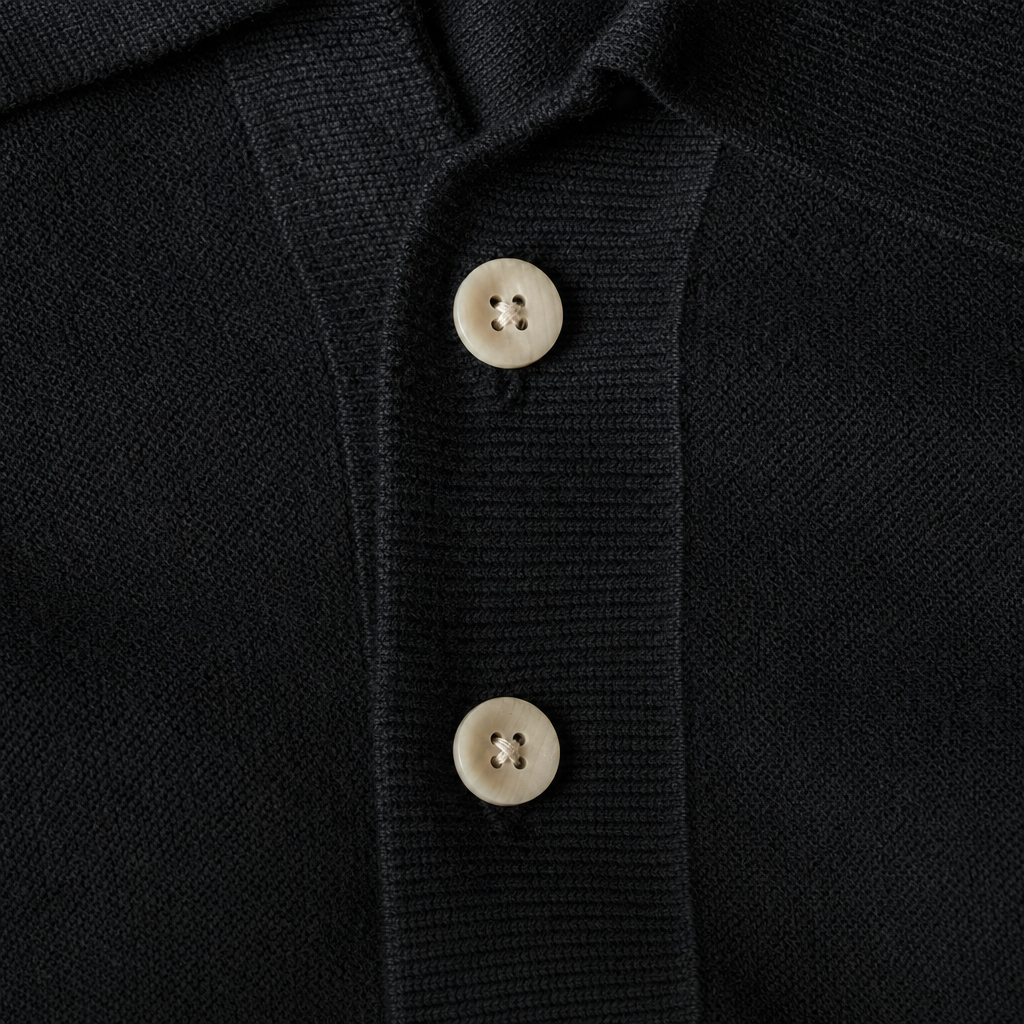
Machine wash cold, delicate cycle, inside out. Reshape while damp and dry flat. Never tumble dry. Store folded — not hanging — because a knit collar will stretch under its own weight on a hanger over time. These four rules, followed without exception, are the difference between a polo that looks good for two seasons and one that looks good for ten. A 12-gauge cotton or wool-blend knit is more robust than it appears; it is the heat and the hanger that damage it, not the wear.
The end of August. The polo has been worn through a month of evenings: a rooftop in July, a harbour dinner, three rounds of travel where it went from carry-on to hanger to back on without complaint. Now it gets a proper wash before it goes into storage. You turn it inside out, drop it into the mesh bag, and set the machine to cold. Forty minutes later it is damp and slightly heavier, and you lay it flat on a clean towel, pulling the collar straight, smoothing the hem.
Can you machine wash a knit polo?
Yes. A cold, delicate (or hand-wash) cycle in a mesh laundry bag is safe for most knit polos, including those in cotton or cotton-linen blends. The mesh bag prevents the knit from snagging on zippers or buttons in the drum. Use a gentle liquid detergent — never powder, which can leave grit in the knit weave. Avoid biological (enzyme) detergents for regular washing; save them for stain treatment only. Cold water preserves both the dye and the fibre structure better than warm.
Can you hand wash a knit polo?
Yes, and it is the gentlest option. Fill a basin with cool water and a few drops of wool or delicate wash. Submerge the polo and work it gently with your hands — squeeze rather than scrub. Rinse thoroughly in cool water until the water runs clear. Press the shirt against the side of the basin to remove excess water; never wring or twist a knit garment, as this deforms the structure of the stitch.
Should a knit polo go in the dryer?
Never. A single tumble-dryer cycle at any heat setting can cause irreversible shrinkage (3–8%), stretch the collar permanently, and roughen the fibre surface. Knit fabric is constructed from loops of yarn — heat causes those loops to contract unevenly. The dryer's mechanical tumbling compounds this by stretching the loops in random directions while they are hot and vulnerable. Air dry flat only: the weight of the garment while hanging will elongate the knit over time, especially at the collar and shoulder seams.

How do you remove pilling from a knit polo?
A sweater stone or fabric shaver removes pills cleanly without damaging the underlying fabric. Work in the direction of the knit rather than against it, using light pressure. Pilling on a quality 12-gauge knit like Squalo Roma is rare in the first year because the yarn twist is tight enough to resist friction. When it does appear, it is usually in the underarm area or along the side seam where fabric rubs against fabric. Regular gentle washing actually reduces pilling by removing loose fibres before they tangle.
How should you store a knit polo?
Folded, not hung. Hanging a knit polo — even on a wide hanger — allows gravity to pull the collar and shoulder seams downward over months of storage. After one season hung, a collar that started sitting flat will sag forward and the shoulder seam will drop toward the upper arm. Fold the polo in thirds (collar to hem, then in half) and store it flat in a drawer or shelf. For seasonal storage, fold clean and place in a breathable cotton bag with a cedar block to deter moths. Never store in a plastic bag — trapped moisture promotes mildew.
How often should you wash a knit polo?
After two to three wears in warm weather. Knit cotton has natural antimicrobial properties and does not hold body odour as readily as woven cotton, so it can go more wears between washes than a T-shirt. Overwashing — particularly in warm water — is the primary cause of premature wear on a knit polo. Between wears, hang on a wooden hanger in a ventilated space to air out naturally. Reserve the full wash for when the shirt genuinely needs it.
Frequently asked questions
Can you iron a knit polo?
Use a steamer rather than an iron. Steam relaxes the knit without the pressure and heat of direct contact, which can flatten the texture. If you must iron, use the lowest setting through a pressing cloth, and never iron the ribbed collar directly.
How do you fix a stretched knit polo collar?
Soak the collar area in cool water, then reshape it by hand while damp. Pin the collar to its original dimensions on a flat surface and let it dry completely. This works well for collars stretched by hanging. Severely overstretched collars — from repeated dryer use or years of hanger storage — usually cannot be fully restored.
What is a 12-gauge knit and why does it matter for care?
Gauge refers to the number of stitches per inch on the knitting machine. A 12-gauge knit has tighter, finer stitches than a 7-gauge knit — it is lighter, smoother, and more drape-forward. The finer gauge also means individual fibres are thinner and more sensitive to heat, making cold water and flat drying more important than on a heavier knit.
Does a wool-blend knit polo require special care?
A cotton-wool blend needs the same cool wash and flat dry as pure cotton, but with extra caution around water temperature. Even a 10% wool content makes the polo more vulnerable to heat-induced felting. Cold wash only, never above 20°C, and reshape immediately after washing while still damp.
See Squalo's linen and knit polos, made to wear back to linen trousers. Take a whole outfit at Shop the Look.
Read next: Men's Knit Polos.


