The collar is the most visible piece of a shirt. It frames the face, it signals formality, it is the first thing a stranger's eye lands on before moving anywhere else. Get it right and everything beneath it reads as considered. Get it wrong — or leave it to chance — and nothing you're wearing quite works.
The open collar is a choice. Three collars in particular define how men dress from noon to a late dinner: the Cuban, the camp, and the spread. Each has its own rules, its own contexts, and its own failure modes.
The Three Collars


Cuban Collar
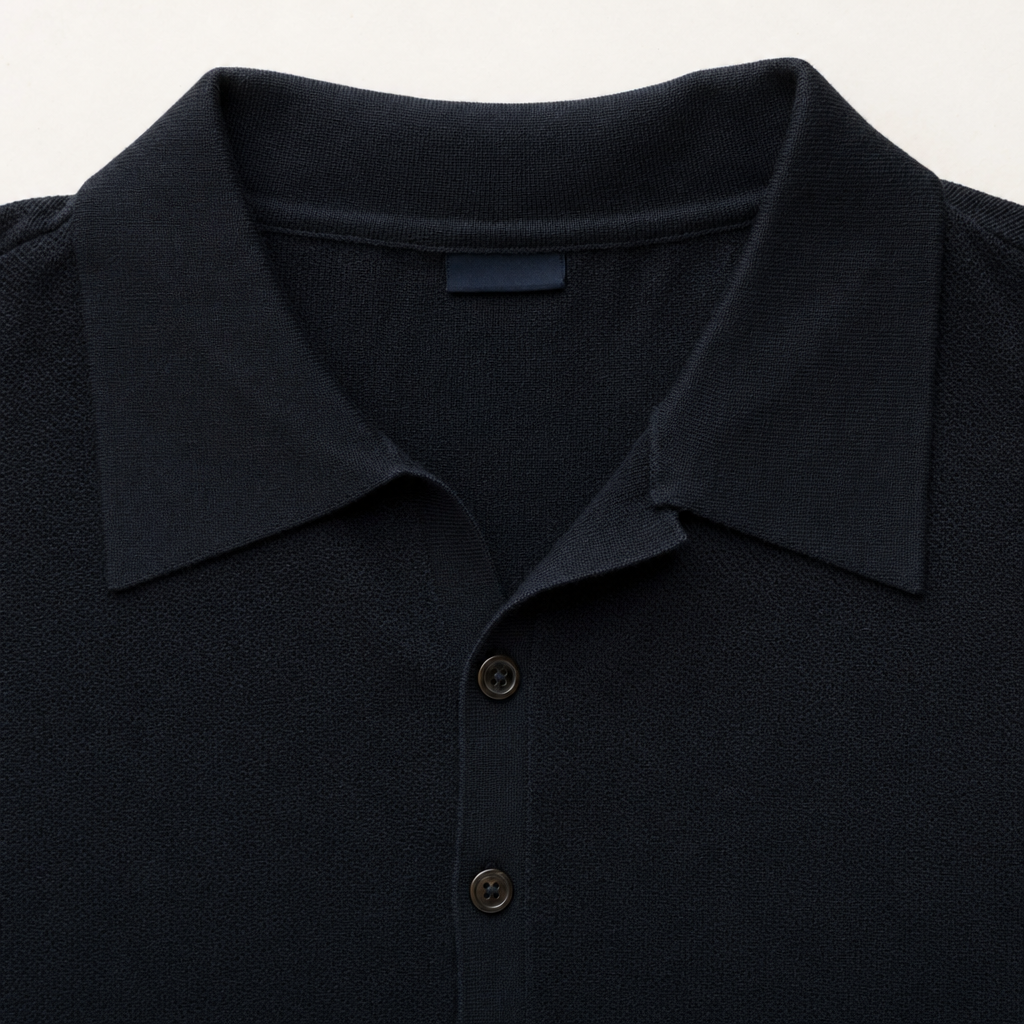
No collar stand. Narrow, pointed tips that lie completely flat against the chest. The buttons run to the hem — the entire shirt is designed around the idea that the collar is always open. It cannot be worn with a tie. It does not need one. It is the most versatile of the open collars: it reads as relaxed during the day, considered in the evening, and correct under a blazer in a way that camp collar often isn't. See the Cuban collar shirt guide for three specific looks.
Camp Collar
Like the Cuban collar, no stand, buttons to the hem. But the collar is wider, with curved or rounded tips rather than sharp points. This makes it feel more relaxed, more resort-inflected. It's the correct choice for a genuine beach holiday or outdoor lunch; it's the wrong choice for a restaurant evening or under a blazer. The wider collar moves more when you move — which looks intentional in the right context and careless in the wrong one.
Spread Collar (Open)
The spread collar is a conventional dress-shirt collar — it has a visible collar stand at the back — worn open, without a tie. This is technically not an "open collar shirt" in the structural sense; it's a dress shirt collar worn open. The spread collar reads as the most formal of the three. It's the correct choice when a meeting or event has a dress code that requires a shirt but you're not wearing a tie. It's too formal for a relaxed lunch and too stiff for a summer holiday.
The Context Table
| Context | Cuban | Camp | Spread (open) |
|---|---|---|---|
| Evening restaurant | Yes | Borderline | Yes |
| Beach/resort/pool | Yes | Yes (ideal) | No |
| Under a blazer | Yes | No | Yes |
| Daytime outdoor | Yes | Yes | Overdressed |
| Smart casual work | Yes | Too casual | Yes |
| Wedding guest | Risky — see guide | No | Yes |
Noon: Café, Sun, Unhurried
The noon open collar is simple: Cuban or camp, one to two buttons undone, untucked, light trousers or shorts, sandals or loafers. The specific shirt matters less than the fabric — linen or fine knit, not cotton jersey. The collar should fall naturally without adjustment.
One mistake: over-opening the collar. Three or more buttons open reads as either a swimsuit layover or a 1970s Saturday Night Fever reference. One button is composed; two is relaxed; three is a context that needs to be very clearly resort or beach to read correctly.
Evening: From the Negroni to the Last Course
By 7pm the open collar has shifted registers. The camp collar shirt goes into the bag; a Cuban collar or spread collar in a darker fabric or darker palette takes over. The fabric needs enough body to hold its shape through a three-hour dinner. Fine knit is better here than linen — linen wrinkles by the end of the evening in a way that reads as tired rather than lived-in.
The Notte Knit Shirt (black Cuban collar) is the evening reference. Under ambient restaurant light, the knit texture gives the shirt visual interest while the flat collar keeps everything clean. One button undone. Tucked into slim dark trousers. Leather shoes. This is the evening from the bar through the last course without a wardrobe decision in between.
Frequently Asked Questions
What is an open collar shirt?
An open collar shirt is any collared shirt worn without a tie, with the top button (or buttons) undone. The term specifically describes shirts designed with collars that sit correctly without a tie — Cuban collar and camp collar styles — rather than dress shirts pressed into casual service. The collar construction determines whether the open version looks intentional or like a dress shirt without its tie.
How many buttons should be open on an open collar shirt?
One button open: composed, slightly formal — works in evening restaurant and smart-casual settings. Two buttons open: relaxed, daytime correct — the right call for outdoor and casual contexts. Three buttons: beach or resort context only. Follow the context; the fabric weight gives you some guidance — heavier knits hold their shape at two buttons better than lightweight linen does.
Is a Cuban collar the same as a camp collar?
No. The Cuban collar has narrow, closely-set pointed tips that lie flat; the camp collar has wider, more spread tips that often curve slightly and fall open more relaxedly. Both have no collar stand and button to the hem. The Cuban is more formal; the camp is more resort. See the visual comparison above.
Can you wear an open collar shirt to work?
In most modern smart-casual offices: yes. A Cuban collar shirt in a solid colour, in fine knit or a quality linen, tucked into tailored trousers, reads as well-dressed in the majority of non-client-facing office environments. In formal or client-facing roles, a spread collar worn open with a blazer is the safer choice — it reads as a shirt-without-tie rather than a specific collar style.
This is the hub article for the Open Collar pillar. See also: Cuban collar shirt outfit guide — Mediterranean style wardrobe.
Read next: The Smart Casual Outfit and Modern Business Casual.


