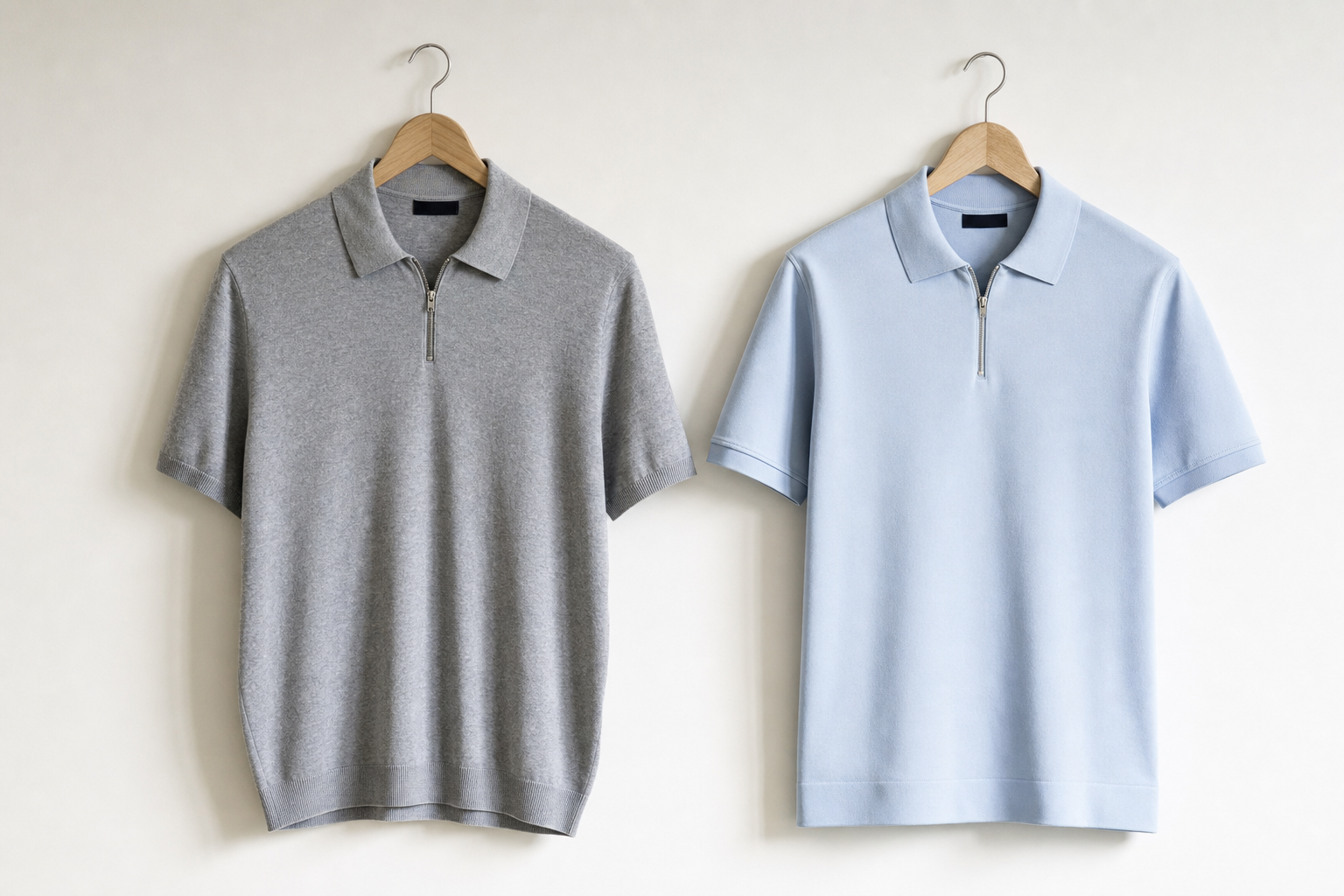
Luca Faloni and Percival make the two most-discussed knit polos in the premium accessible tier. They share price proximity ($155–$220), fabric quality (fine-gauge cotton or cotton-blend knit), and aesthetic positioning (not a pique polo, not sportswear). They diverge completely on identity: Faloni is Italian restraint, Mediterranean-influenced, quiet. Percival is British wit, playful without being casual, occasionally irreverent. Both are good shirts. The right choice depends entirely on the version of yourself you want the shirt to express.
Two polos arrive in the same week. Faloni in navy, Percival in a slightly bolder mid-blue. Both are 12-gauge fine knit. Both have a two-button placket. Side by side, the difference is harder to articulate than you expect — and then you look at the details, and you understand exactly what each brand is doing.
What is the difference in construction between Faloni and Percival?
Luca Faloni knit polos are made in Italy — specifically Castel Goffredo, a region specialised in fine knitwear for generations. The construction is traditional: fully fashioned knitting (each panel shaped on the knitting machine rather than cut from fabric), visible rib detailing at collar and cuffs, and a longer body that works both tucked and untucked. Percival polos are made in Portugal, also with strong knitwear manufacturing credentials. The construction is clean and precise, with slightly less conservative collar detailing — the brand experiments more with collar shapes and shorter bodies than Faloni does.
Faloni vs Percival: fit comparison
| Luca Faloni | Percival | |
|---|---|---|
| Cut | Relaxed, generous body | Slim to regular, shorter body |
| Shoulder | Set-in, slightly dropped | Set-in, structured |
| Length | Long — works tucked or untucked | Mid-hip — primarily untucked |
| Collar | Traditional two-button, conservative | Two or three button, collar varies by style |
| Gauge | 12-gauge fine knit | 12–14 gauge depending on range |

Which brand has better quality at the price?
Comparable. Both brands use quality materials — Faloni's Italian manufacturing and Percival's Portuguese production are both credentialed. Faloni has a slight edge in construction tradition (fully fashioned Italian knitwear has a longer heritage than most Portuguese production). Percival has an edge in design range — it experiments more with silhouette and colour, which means there is a broader shelf to find a polo that suits a specific preference. For a conservative buyer: Faloni. For a buyer who wants variety within the same quality tier: Percival.
Where does Squalo Roma fit against Faloni and Percival?
Below both on price ($70 vs $155-$220) and on manufacturing heritage, but occupying the same aesthetic lane. A Squalo Roma 12-gauge knit polo in navy is a genuine entry point to the same visual conversation as Faloni and Percival: fine-gauge knit, two-button placket, Mediterranean colour palette. The construction is different and the brand story is younger. Squalo Roma sells Italian design rather than a manufacturing region. For a buyer exploring the lane for the first time, or building a wardrobe where a $220 polo per piece is not practical: Squalo Roma is the starting point, and Faloni or Percival is the upgrade once the lane is confirmed.
Frequently asked questions
Does Luca Faloni or Percival run true to size?
Faloni runs generous — most buyers size down from their normal size. Percival runs closer to true to size but the shorter body can feel short on taller men. Both brands have detailed size guides; measure against their chest and length measurements rather than relying on standard sizing.
Which is better for a first knit polo?
Percival, because the lower price reduces the risk, the range is broader, and the brand has a clear point of view that is easier to evaluate. If you try Percival and want something quieter and more traditional, Faloni is the natural next step.
Are either Faloni or Percival worth it compared to Squalo Roma?
For the manufacturing story and construction heritage: yes. For the aesthetic result: Squalo Roma at $75 achieves the look for a fraction of the price. The question of worth depends entirely on how much the manufacturing origin and brand story matter alongside the visual result.
Read next: Old Money Style for Men and Men's Knit Polos.


