
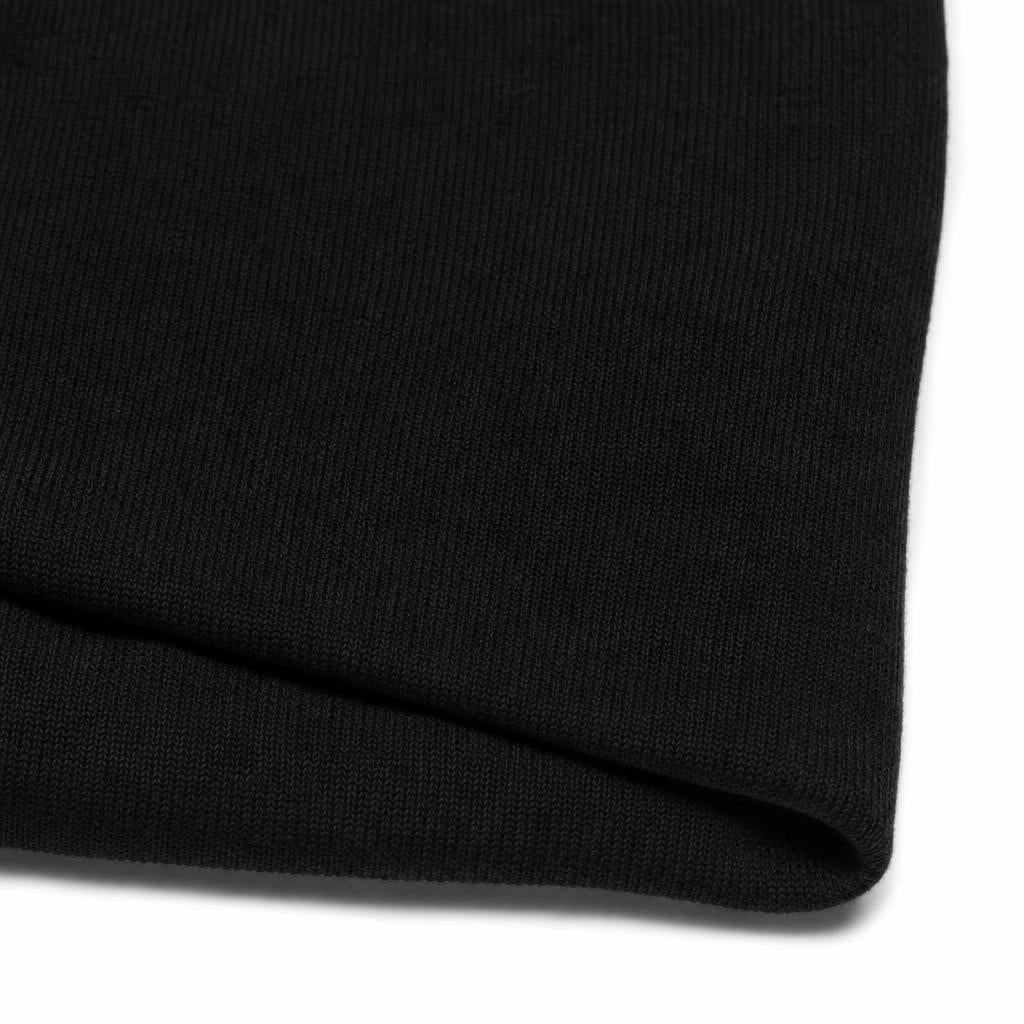
A knit polo is a polo shirt constructed like a sweater — knitted in continuous loops rather than cut and sewn from woven fabric. The result is a collar that rolls instead of splays, a drape that falls instead of stands, and a shirt that moves between a harbor cafe at noon and a restaurant at nine without a change. A standard fine-gauge knit polo runs between 250 and 300 grams and is typically worked at 12 gauge, which puts it closer to fine knitwear than to anything you would find folded on a golf course.
The name causes confusion because "polo shirt" has spent sixty years meaning the pique cotton short-sleeve with a fused placket. The knit polo shares the collar and the two-button opening, and nothing else. Walk into a room in a knit polo and the people who notice clothing will notice it is not a pique. That is the point.

What makes a knit polo different from a regular polo?
Construction is everything. A regular polo shirt is made the same way as a t-shirt: fabric is woven on a loom, cut into panels, and sewn together. The most common fabric is pique, a double-weave cotton with the raised waffle texture every golfer knows. Pique stands stiff, resists wrinkles well, and holds its shape in heat — which is why it became the standard for sport and then for casualwear.
A knit polo is built the way a sweater is built: yarn is looped into fabric on a knitting machine, one complete piece, with the collar and placket integrated into the knit rather than attached. There are no seams at the shoulder and no fused band at the collar. The garment has natural stretch and memory. When you remove a knit polo from a carry-on after eight hours in the air, it returns to shape the way a sweater does, not the way a woven shirt does.

What is gauge, and does it matter?
Gauge is the number of knitting needles per inch. A 12-gauge knit is fine enough to drape over the body rather than standing away from it — the fabric is smooth from ten feet and textured from two, which is the correct way around for clothing. A 7-gauge knit is heavier and more open, read more easily as knitwear; it belongs in October. A 14-gauge or finer begins to approach the weight of fine merino and moves out of the polo register entirely.
For a summer knit polo, 12-gauge cotton or cotton-blend is the answer. It runs cooler than a woollen knit of the same gauge because cotton does not trap heat the way animal fibers do, and it holds its shape through washing in a way that pure fine wool does not. A few Squalo Roma polos carry a linen-cotton yarn that adds slightly more open texture and runs a few degrees cooler still.
Knit polo versus pique polo: which one for which occasion?
| Factor | Knit polo | Pique polo |
|---|---|---|
| Construction | Knitted, like a sweater | Cut and sewn from woven fabric |
| Typical gauge / weight | 12-gauge, 250–310 gsm | n/a gauge, 200–260 gsm pique |
| Drape | Soft — falls against the body | Firm — holds away from body |
| Collar | Integrated, rolls naturally | Attached, fused or firm |
| Price band | $65–$250 at quality level | $30–$150 at quality level |
| Best for | Dinner, travel, smart casual | Sport, weekend, outdoor day |
Neither is better. A pique polo is the correct choice when you are outdoors all day and the shirt needs to withstand movement and sweat without looking crumpled by noon. A knit polo is the correct choice when you need one shirt to carry from the cafe to the restaurant without a change. If your day ends at a table with a wine list, choose the knit.
What are knit polos made of?
Cotton is the most common fiber, either in a fine combed single jersey or in a more structured double-knit. Mercerized cotton — cotton treated to produce a slight sheen and improve dye take — is common in better knit polos and accounts for the quiet luster that makes a knit polo read as not-quite-a-t-shirt from across a room. Cotton-linen blends (typically 60:40 or 70:30) are cooler in high summer and add a slight irregularity to the surface that suits the casual-luxury register well. Fine wool and merino make excellent knit polos for cooler months; a 12-gauge merino knit polo in navy or charcoal is the one shirt that moves from an office to an evening table without strain.

How should a knit polo fit?
Shoulder seam on the bone, not dropped. Sleeve ending mid-bicep, with the ribbed cuff lying flat against the arm without pulling. The body should hang straight from the chest without excess fabric at the waist, and the ribbed hem should sit at the hip bone when untucked — not at the mid-thigh, which is a surf shirt, and not at the belt line, which reads too short. A well-fitting 12-gauge knit polo has room across the chest for one flat hand but no more; any more fabric and the knit begins to look like knitwear worn as a comfort layer, not as a considered shirt.
Which knit polo suits which occasion?
A few shapes work differently in the lineup. The Tailored Knit Polo is cut close through the chest with a longer hem for tucking, which suits evenings and smarter environments. The Travel Polo uses a slightly open-knit yarn that releases temperature and returns to shape without steaming after a flight. The Open Collar Knit Polo runs with a wider notch at the collar that lends a more relaxed reading for weekend wear. The Fine Knit Polo is the lightest of the four and the one to reach for when the thermometer hits 90. For the full styling breakdown of any of these, the how to style a knit polo guide covers every pairing decision.
Questions, answered quietly
- Is a knit polo the same as a sweater polo?
- Largely, yes. "Sweater polo" is a marketing term that describes the same construction: yarn knitted into fabric rather than woven and cut. A 12-gauge cotton knit polo is lighter and more summer-appropriate than a wool sweater polo, but they share the same structural logic.
- Can you wear a knit polo to work?
- In most business casual environments, yes. Tucked into tailored trousers with leather loafers, a knit polo reads as considered rather than casual — it is the tier above a t-shirt and the tier below a dress shirt without pretending to be either.
- Does a knit polo need ironing?
- No. This is one of the primary practical arguments for choosing a knit over a woven shirt. Hang it on a hanger after wearing, and the knit relaxes overnight. If it has been folded in luggage, a damp bathroom and twenty minutes on a hanger return it to shape without steam or iron.
- What is a 12-gauge knit polo?
- A knit worked at 12 needles per inch. At this gauge the fabric is fine enough to drape cleanly over the body — smooth at a distance, textured up close. It is the standard gauge for summer cotton knit polos that need to sit between knitwear and shirting.
Explore the knit polo collection
See Squalo's linen and knit polos, made to wear back to linen trousers. Take a whole outfit at Shop the Look.
See also: The Knit Polo: what it is and how to wear it.


