
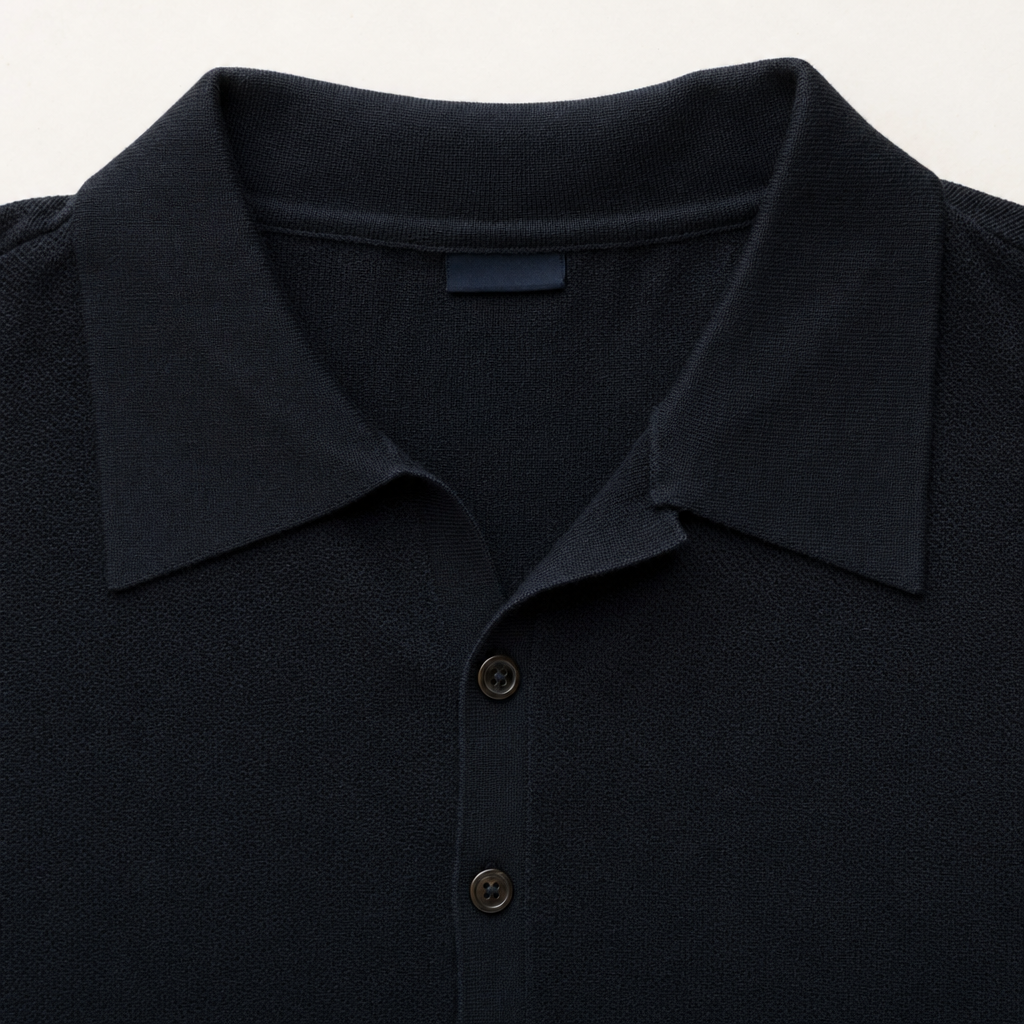
Both the Cuban collar and the camp collar are open-collar shirts worn without a tie, but they are distinct garments. The Cuban collar is rectangular and cut straight, typically with a shorter shirt body and a boxy fit — it reads crisper, more urban. The camp collar has slightly pointed collar tips and a relaxed, longer cut — it reads softer, more island-casual. Both work beautifully in linen or a lightweight fabric; the difference is in the occasion they suit best and the decade they reference.
Two shirts on the table. Both linen, both the same weight, both designed to be worn open. From a distance they look identical: no buttons at the collar, short sleeves, a placket that runs to the chest and stops. Then you look at the collar points. One is square and flat; one turns slightly inward at the tip. That difference in millimetres is the difference between a Havana casino and a California beach house in 1968.
What is a Cuban collar shirt?
A Cuban collar shirt — also called a camp shirt or cabana shirt depending on regional convention — has a notched, rectangular collar that folds flat against the chest without curling at the tips. The collar band is usually short or absent entirely. The shirt is traditionally cut straight and worn untucked, with a body length that ends at the hip. The aesthetic is urban resort: it works in structured linen or textured fabrics, reads as considered rather than beach-adjacent. Squalo Roma's open-collar shirts use a Cuban collar construction.
What is a camp collar shirt?
A camp collar shirt shares the open-collar, no-necktie construction but has a longer, slightly pointed collar that folds across the chest and often reaches lower on the placket. The camp collar originated in 1930s American sportswear and was standardised in the aloha shirt tradition. The body is usually longer and cut with more ease than a Cuban collar shirt — it is a more relaxed garment. Camp collar prints tend toward bold patterns; plain-fabric camp collars are less common than Cuban collar versions.

Cuban collar vs camp collar: which looks sharper?
The Cuban collar, by a clear margin in formal-casual contexts. The rectangular collar and shorter body create a cleaner horizontal silhouette — it pairs easily with tailored trousers and reads as a considered choice rather than a casual one. The camp collar is a more relaxed garment; it works at beach resorts and weekend tables, but the looser collar and longer body make it harder to dress up. For Mediterranean-style dressing — the occasion a Squalo Roma shirt is built for — the Cuban collar is the correct choice.
Which collar works better for linen?
Both work in linen, but the Cuban collar is more common in quality linen shirts because the structured rectangular collar holds its shape better in a natural fabric. Linen softens with wear and humidity, which suits the flat, pressed Cuban collar well — the collar relaxes slightly without losing its line. The camp collar in linen can become floppy quickly, particularly in high humidity; its pointed tips curl and lose definition. If you are buying a linen open-collar shirt, the Cuban collar construction is the more reliable choice.
Can you wear a Cuban collar to a smart occasion?
Yes — it is one of the few open-collar shirt styles that functions at smart-casual events. A plain or subtly textured Cuban collar shirt in linen, worn with tailored trousers and suede loafers, reads as intentionally considered rather than underdressed. The key is the fabric and the fit: a structured linen or a fine cotton-linen blend in a neutral colour, cut close to the body, signals formality without requiring a collar button or a tie. The camp collar in the same situation reads as more casual.
Frequently asked questions
Are Cuban collar shirts in style?
Yes, and consistently so since the early 2010s. The Cuban collar has become the default choice for men who want the no-tie look without the casual read of a camp shirt. It appears regularly in tailored editorial contexts, which keeps it current without being trend-dependent.
Can you wear a camp collar to a wedding?
As a guest in a warm-weather or resort-setting wedding, yes — if the dress code is stated as casual or resort. At a traditional venue or if the code is smart-casual, the Cuban collar is a better choice. The camp collar at a formal wedding reads as underdressed.
What is the difference between a bowling shirt and a Cuban collar?
A bowling shirt is a variant of the camp collar tradition, usually in rayon with contrasting piping and embroidery. A Cuban collar is cleaner and more minimal — no contrasting details, no embroidery, no bold prints. They share the open-collar, no-button construction but serve different aesthetics.
Do Cuban collar shirts need to be ironed?
The collar benefits from a light steam or press to keep its rectangular shape crisp. The body can be worn with the natural drape linen or cotton develops after air drying. A fully pressed Cuban collar shirt reads as very deliberate; a lightly steamed one reads as relaxed but considered.
Read next: Men's Knit Polos and The Smart Casual Outfit.


