
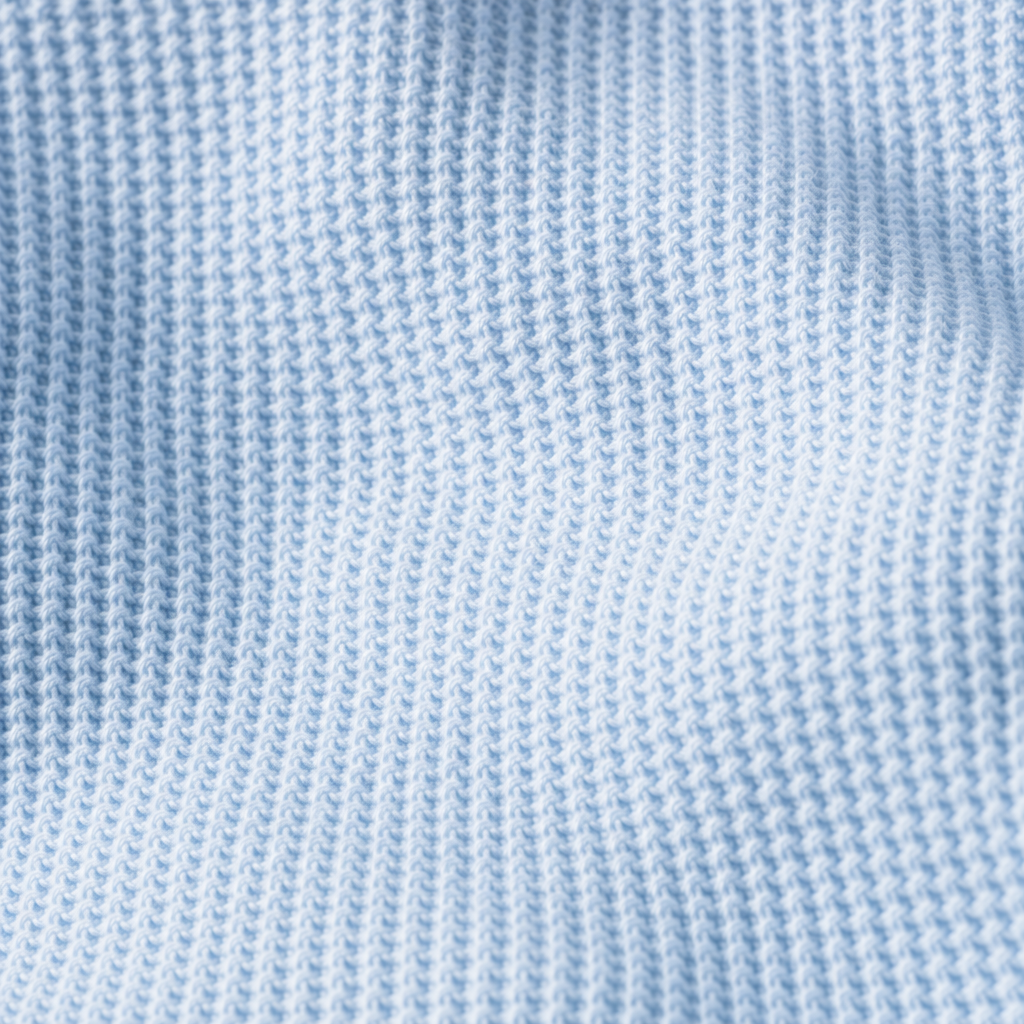
Not all polo shirts are golf polos. The classic pique polo — the one with the Lacoste crocodile or the Ralph Lauren horse — is a sports garment adapted for casual wear. The knit polo is something different: a fine-gauge knitwear garment that shares the collar and placket of the polo shirt but has no sports heritage, no mesh, no sweat-wicking claims. It is what the polo shirt would have been if it had been designed for European summer occasions rather than American country clubs. Understanding the difference is the first step to wearing either correctly.
The confusion exists because both garments are called "polo shirts" in retail contexts. You see them side by side: the Lacoste pique with its visible waffle texture, the Luca Faloni knit polo in fine Egyptian cotton. Both have two-button plackets and ribbed collars. Beyond that, they are different garments with different uses, different care requirements, and different occasions.
What is a knit polo shirt?
A fine-gauge knit polo is constructed from continuous yarn — typically cotton or cotton-blend — on a flatbed knitting machine at 12–14 stitches per inch. The fabric has horizontal stretch and a smooth, matte surface. The collar is cut from the same knit fabric and has a soft roll rather than the structured stand of a pique collar. The result is a shirt that drapes where the pique polo stands — it falls from the shoulder rather than holding a boxy shape. Brands: Luca Faloni, Percival, John Smedley, Squalo Roma.
What is a pique polo shirt?
A pique polo is woven (not knit) using a specific weave structure that creates the characteristic raised waffle or "bird's eye" texture. The fabric has minimal stretch and is durable, breathable, and quick-drying — which is why it was originally designed for tennis in the 1920s. The collar is structured and stands slightly away from the neck, and the shirt holds a rectangular shape even off the body. The fabric is typically heavier (180–220 GSM) than a fine-gauge knit polo (140–160 GSM). Brands: Lacoste, Ralph Lauren Polo, Fred Perry.
Knit polo vs pique polo: at a glance
| Knit polo | Pique polo | |
|---|---|---|
| Fabric construction | Knit — continuous yarn, horizontal stretch | Woven — pique weave, minimal stretch |
| Texture | Smooth, matte, drapes well | Textured waffle pattern, holds shape |
| Collar | Soft, rolls naturally | Structured, stands slightly |
| Weight | 140–160 GSM (lighter) | 180–220 GSM (heavier) |
| Occasion | Resort, occasion, dinner, travel | Sports, casual, country club |
| Heritage | European knitwear tradition | Tennis / sport |
| Price range | $49–$400+ | $35–$150 |

When should you wear each?
The pique polo belongs in sport-adjacent contexts: casual summer weekends, golf, tennis, outdoor lunches where practicality is valued. It reads as athletic wear adapted for casual use, which is exactly what it is. The knit polo belongs in considered occasion wear: Mediterranean dinners, resort check-ins, smart-casual events, anywhere you would normally wear a shirt but want the open-collar look. The knit polo is not a casual garment — it is a refined garment designed to be worn intentionally. Wearing a pique polo to a rooftop dinner reads as underdressed; wearing a knit polo reads as the right choice made deliberately.
Can you wear a pique polo like a knit polo?
In certain contexts. A classic Lacoste pique in navy or white, worn with tailored shorts or linen trousers, is a viable smart-casual look that has operated in that lane since the 1950s. The difference is in the occasion ceiling: the pique polo tops out at smart-casual. The knit polo goes further — it can sit at a dinner table in a good restaurant without reading as underdressed. If the occasion ceiling matters, the knit polo is the more versatile garment.
Frequently asked questions
Is a knit polo the same as a jersey polo?
Similar. Jersey fabric is also knit, but typically from a single-yarn knit (jersey stitch) that is softer and less structured than the double-knit construction of a fine-gauge polo. Most T-shirts are jersey; most quality knit polos are double-knit or fine-gauge flat-bed knit, which gives them more body and structure. The terms overlap in retail but the constructions are distinct.
Why do knit polos cost more than pique polos?
Fine-gauge knitting is slower and requires more precise machinery and yarn quality than pique weaving. A 12-gauge knit polo requires finer yarn (higher count cotton) and more machine time per piece than a pique shirt at the same size. The construction cost is higher before brand premium is added. At equivalent brand tiers, the knit polo is more expensive to make.
Can you wear a knit polo with a blazer?
Yes — it is one of the better combinations. A fine-gauge knit polo under an unstructured blazer (linen or lightweight wool) is the Italian approach to smart-casual that the garment was designed for. The collar lies flat and visible above the blazer lapel; the knit body drapes cleanly beneath the jacket. This combination works better than a pique polo under a blazer, where the structured pique collar competes with the jacket lapel.
Read next: Men's Knit Polos.


