
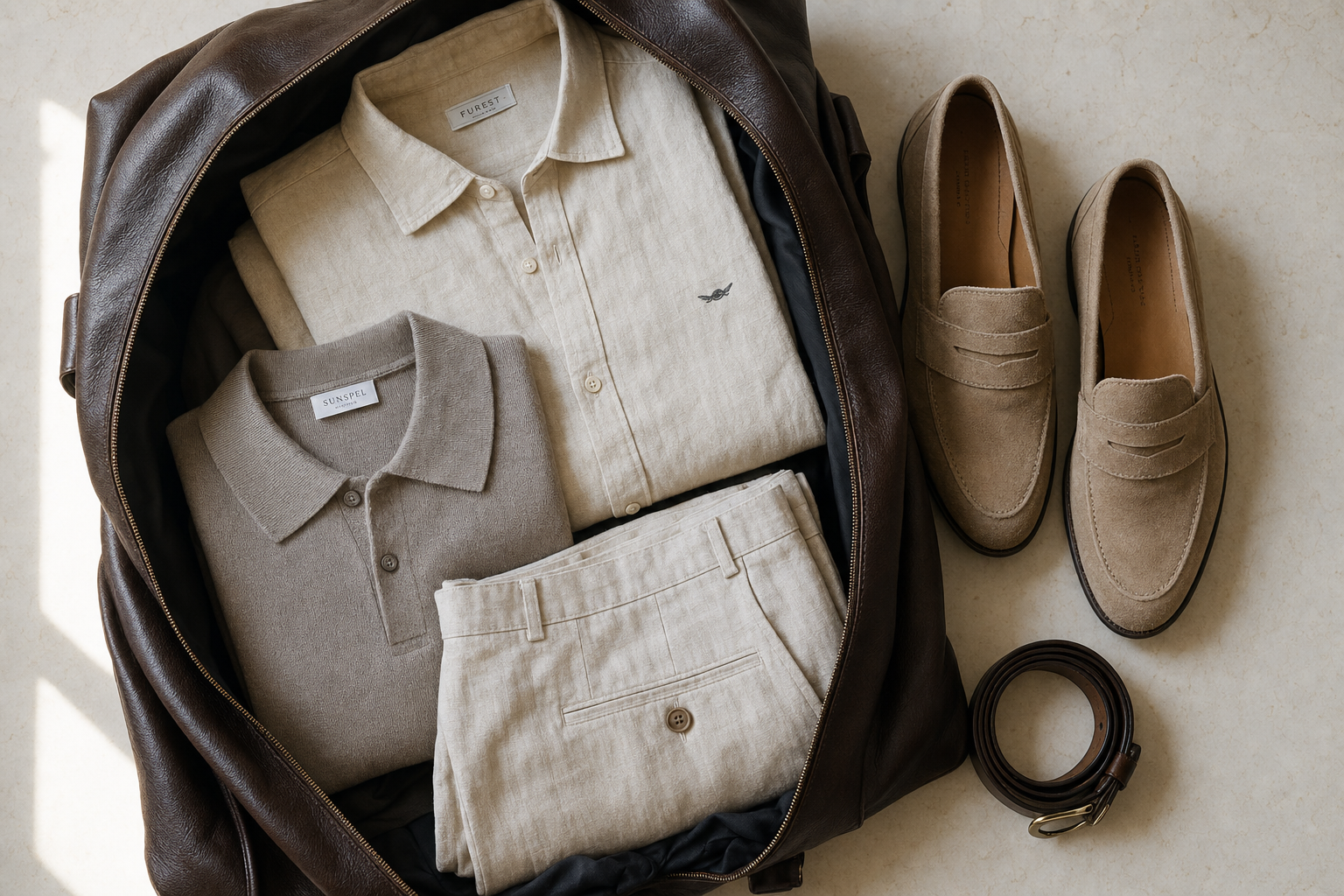
You have seen the version of this trip where someone packs for a week and brings three suitcases. They spend the first morning dragging luggage up steps that were not designed for wheels, wearing a t-shirt that already reads as tourist. They will iron nothing for seven days and still feel overdressed at the wrong moments and underdressed at the ones that matter.
Here is a different version: one carry-on, ten days, and you look like you live there.
The One-Bag Capsule

Italy in summer is a specific packing problem. The historic towns demand some level of dress for churches and upmarket restaurants — you will need covered shoulders and some resemblance of trousers. But the rest of the time you are in 32°C heat, walking cobblestone that has been absorbing sun since noon, eating outdoors until late.
The capsule: two linen long sleeve shirts (beige and white), one linen short sleeve shirt, two fine knit polos (stone and navy), two pairs of linen trousers, one pair of shorts, leather sandals, suede loafers. The linen and knit travel without creasing catastrophically and dry overnight if washed in the sink. Nothing requires dry cleaning.
The loafers go into the shoes compartment of the bag. Everything else is rolled or folded flat. The linen will crease in transit. It doesn't matter — ten minutes hanging in the bathroom steam of a morning shower and it falls out. Or don't — linen that is slightly creased in Italy looks like you've been there a week, which is the ideal state.
Morning on the Cobblestones

Italian mornings run early. The best bread is gone by 8:30. The light on the stone at 7am has a quality that is different from every other hour of the day, and walking through it requires a shirt that is either already the right colour or gets there by absorbing the light.
Beige linen does this. In the morning Mediterranean light, it reads as warm and considered. The same shirt in a fluorescent supermarket at home would look beige. Here, on these stairs, it looks correct.
Collar two buttons open. Sleeves down at this hour — the temperature hasn't climbed yet, and there's something slightly too deliberate about rolling your sleeves at 7am. Linen trousers. Leather sandals on the cobbles.
The Afternoon Café

By 1pm the light has moved overhead and the afternoon has settled into the long, unhurried Italian middle. You have found the café table that is partly in shade. There is an espresso. There will not be a hurry for some time.
This is the Travel Polo hour. The fabric is fine enough to breathe in the afternoon heat; structured enough to look like a deliberate choice rather than what you grabbed; light enough that you forget you're wearing it by the time the second coffee arrives. Collar one button open. Untucked. The trousers can be the linen ones from the morning or lighter shorts if the afternoon sun has genuinely committed.
What to Wear Where
| Context | Outfit | Notes |
|---|---|---|
| Church visit | Linen long sleeve, trousers, loafers | Covered shoulders, long trousers. Non-negotiable in most Italian churches. |
| Restaurant (casual) | Knit polo, linen trousers, loafers | Most Italian casual restaurants: this is well-dressed. Bare feet or flip-flops: no. |
| Restaurant (upmarket) | Linen shirt tucked, linen trousers, loafers | No blazer needed in most summer contexts unless specifically smart dress. |
| Museum / gallery | Linen shirt or knit polo, trousers or shorts | Air-conditioned — bring a layer or the linen shirt with sleeves down. |
| Beach / pool | Linen SS shirt open over swim shorts | The open short-sleeve shirt is the correct beach-to-street transition. |
| Evening passeggiata | Navy knit polo, slim linen trousers, loafers | Evening walk requires slightly more structure. The navy polo is the move. |
The Fabric Logic of Italian Summer
Italy in July is not the same climate as, say, Portugal in July, which is not the same as Tuscany in August. But the logic is consistent: you need fabric that breathes faster than the heat accumulates. Linen does this; cotton poplin does not (tight weave, slow air movement); synthetic blends do not (no moisture transport).
The other Italian summer requirement: the fabric should look correct slightly worn. You are not going to be freshly pressed at 3pm. The outfit you've been wearing since 9am should look like it belongs on someone who has been living inside the day, not someone who just changed. This is an argument for linen — which wrinkles in a way that reads as lived-in — and against cotton chinos, which crease in a way that reads as neglected.
Frequently Asked Questions
Can I wear shorts in Italian cities?
Yes, in most outdoor and casual contexts. Not for churches, upmarket restaurants, or operas. Linen shorts that read as tailored (not cargo, not denim) are the right call — they look like a decision rather than a default.
What shoes work for Italy in summer?
Leather sandals for most of the day — they handle cobblestone, heat, and restaurant terraces equally well. Suede loafers for the evening. White sneakers read as tourist in historic centres; save them for modern cities like Milan.
Do I need to bring a blazer to Italy?
For most summer trips to southern Italy, no. A linen shirt with tailored trousers covers most restaurant dress codes. For northern Italy (Milan, Venice's Gritti Palace, etc.) or any specifically smart evening, an unstructured linen blazer earns its place in the bag.
How do I keep linen from being too creased?
You don't, fully — and that's fine. Hang the shirt in a steamy bathroom the first morning if you want to reduce transit creases. After that, the crease is the shirt doing its job. Roll shirts for packing rather than folding — rolling creates fewer deep creases. Full guide: The Linen Shirt Guide.
Related: Mediterranean style wardrobe guide — the complete linen shirt guide.
See also: Men's Linen Trousers: how to choose and wear them.
Read next: Old Money Style for Men.


