
There is a moment, somewhere around the third hour of wearing a linen shirt in a warm climate, when you understand why anyone would ever choose it over cotton or synthetic-blend. The shirt has stopped being a shirt you are wearing and become something closer to a temperature regulation system that also happens to look correct.
This is the guide to that shirt — what it is, why it works, how to wear it, and how to keep it working across a decade of summers.
What Makes Linen Different

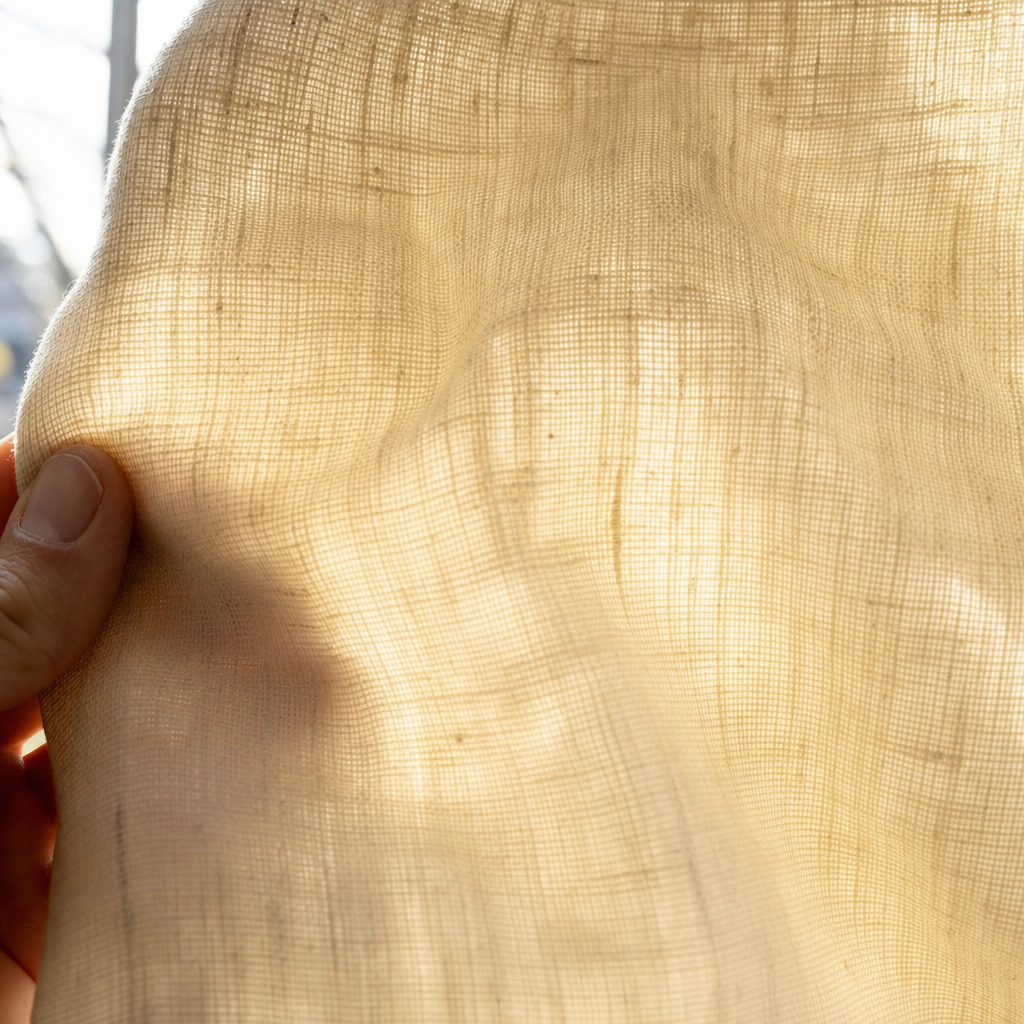
Linen is woven from the fibres of the flax plant. Unlike cotton, which grows as a round fibre with smooth walls, linen fibre is flat and has a natural hollow core. This structure means linen conducts heat away from the body at roughly two to three times the rate of cotton. It is also naturally wicking — moisture moves through and evaporates quickly, which is why a linen shirt that has collected sweat feels dry again faster than its cotton equivalent.
The visible slub — the slight irregularity in the yarn thickness that gives linen its characteristic texture — is not a weaving defect. It's a product of how flax fibre bundles into yarn: never perfectly uniform, always with slight variation in diameter. This is what creates the matte, slightly uneven surface that is linen's visual identity.
A linen shirt holds less heat than cotton because the open weave traps less air. The downside: linen creases more readily. The tradeoff is worthwhile in any climate above 22°C.
What to Look For in a Linen Shirt

Weight
Linen fabric is measured in grams per square metre (GSM). Lightweight linen (120-160 GSM) is sheer and moves beautifully but is see-through in bright light and rumples more aggressively. Midweight linen (160-210 GSM) — the range used in Squalo Roma shirts — has enough body to hold its shape, photograph well, and survive a full day without looking abandoned. Heavy linen (210+ GSM) is more jacket territory.
Buttons
Shell or corozo buttons indicate quality; plastic buttons indicate cost-cutting. The difference is visible in the slight surface variation of a real shell button versus the uniform flat surface of plastic. Shell buttons also wear differently — they accumulate a patina rather than yellowing. This is a detail most people don't consciously notice but register subconsciously as quality.
Collar construction
The collar of a linen shirt should have enough structure to lie flat when asked but enough softness to sit naturally when open. A fused collar (one with adhesive interlining) will hold its shape with military rigidity but eventually delaminate. A floating collar construction — canvas or softer interlining — moves more naturally and ages better. Open the collar. It should lie in a natural, slightly relaxed curve, not a forced-flat right angle.
Fit through the body
Linen needs to move away from the body slightly to breathe. A very slim-fit linen shirt that presses against your torso defeats the purpose of the fabric — it can't circulate air against your skin. The correct fit: close enough at the shoulder and chest to read as fitted, with some ease through the midsection and enough room in the sleeve to roll comfortably without bunching.
How to Wear a Linen Shirt
Open collar (the default)
One to two buttons undone. The collar points should fall naturally — not pinned flat, not aggressively spread. If the collar is sitting oddly, the problem is usually that the shirt is too small in the neck.
Untucked
A linen shirt worn untucked should have a straight or slightly curved hem cut for untucking — not the longer tail of a dress shirt, which creates a bump under the back of a jacket and is clearly a shirt that's been pulled out rather than designed to be out. Squalo's linen shirts have a shorter hem designed for the untucked position.
Tucked
Linen tucks cleanly and holds the tuck longer than most people expect — the weight of the fabric keeps it in place. Tuck when the outfit requires it (tailored trousers, smart-casual setting). Untuck for casual and holiday contexts.
Sleeves rolled
Roll to just below the elbow, not to the mid-forearm (which creates a bulky wrist) and not with a single fold (which looks hurried). One clean fold, cuff turned back, creates a clean horizontal line at the forearm that reads as intentional.
Layered
A linen shirt under an unstructured blazer is one of the best options for semi-formal summer occasions. The linen collapses with the blazer rather than creating collar bulk. Choose a slightly heavier gauge linen when layering — the blazer will sit better over it.
The Linen Shirt Across the Day
| Time | Context | Adjustments |
|---|---|---|
| Morning | Coffee, market, harbour | Untucked, 2 buttons open, sleeves down or loosely rolled |
| Midday | Lunch, terrace, town | Untucked, 2 buttons open, sleeves rolled to elbow |
| Afternoon | Walking, gallery, shopping | 1 button open, sleeves can be rolled or down depending on heat |
| Early evening | Pre-dinner drinks | 1 button open, tucked if trousers are tailored, sleeves down |
| Evening dinner | Restaurant, terrace dining | Tucked or untucked with blazer; collar open but composed |
Caring for Linen
Linen is significantly tougher than it looks. The fibre itself is one of the strongest natural fibres — it gains strength when wet, which is why washing linen in warm water is fine and hot water is often used intentionally to shrink and soften new linen.
- Temperature: 30-40°C, gentle or normal cycle. Cold works; hot works once to pre-shrink but may fade dye.
- Spin: Low. High-speed spinning creates sharp creases that are harder to remove than the gentle wrinkles of normal wear.
- Drying: Line dry, not tumble dry (tumble dryer shortens linen's life significantly through mechanical abrasion). Shake the shirt out before hanging — this removes most of the main body creases before they set.
- Ironing: Iron damp on a medium-high cotton setting. Bone-dry linen is much harder to press. Or: embrace the wrinkle. A linen shirt that has been worn for two hours looks exactly as it should — that's the fabric doing what it's supposed to do.
- Storage: Folded or hung — linen doesn't mind either. Don't store damp. Don't store with cedar blocks directly touching — the oils can spot linen.
Squalo Roma Linen Shirts
- Linen Long Sleeve Shirt — Beige: the core piece. Midweight, slim-cut, shell buttons, designed for untucked wear in hot weather.
- Linen Long Sleeve Shirt — White: evening option. More structure than the beige; works under a blazer.
- Linen Long Sleeve Shirt — Navy: cooler tones, works into autumn. The most formal of the linen long-sleeve range.
- Linen Short Sleeve Shirt: designed to be worn open. Resort and poolside. Not a truncated version of the long sleeve — a different garment with a different hem and cut.
Frequently Asked Questions
Does linen shrink?
Yes, linen shrinks — primarily in the first one or two washes. The shrinkage is mostly in length (1-3%) and can be minimised by washing at 30°C and line drying. See the complete guide to linen shrinkage.
How do you wash a linen shirt?
30-40°C, gentle cycle, low spin, line dry. Do not tumble dry. Iron damp. Full details: how to wash a linen shirt without ruining the summer.
Is linen better than cotton for summer?
In hot weather above 22°C: yes. Linen breathes faster, wicks moisture more efficiently, and — crucially — doesn't trap heat against the body the way tight-weave cotton does. In cool weather or air conditioning: cotton is more comfortable. See the full linen vs cotton comparison.
Can I wear a linen shirt to a wedding?
Yes, for outdoor summer weddings with a garden party, smart casual, or semi-formal dress code. Pair with linen or tailored trousers and leather loafers. See the complete summer wedding outfit guide.
Why does linen wrinkle so much?
Linen wrinkles because the flat fibres don't have the same elastic recovery as round cotton fibres. When linen is compressed (sitting, folding), the fibres bend and stay bent. This is not a defect in the fabric — it's the same structural characteristic that makes linen breathe well. The wrinkle in linen, worn naturally, looks correct. A wrinkle-free linen shirt has usually been treated with a synthetic finish that compromises its breathability.
This is the hub article for the Linen pillar. Related: Mediterranean style wardrobe — summer wedding outfit — what is a knit polo.
See also: Men's Linen Trousers: how to choose and wear them.


